The benefits of PVC-Free Wall Cladding go beyond choosing a more sustainable material. For healthcare projects, PET-g wall cladding can combine recyclability with the hygiene, durability and practical performance these environments require.
For architects and specifiers, this creates another option when sustainability forms part of the project brief.
Rather than choosing between environmental goals and practical performance, project teams can consider materials that address both.
Here are five benefits to consider.
1. A PVC-Free Material Choice
One of the clearest benefits is also the simplest: PET-g provides an alternative for projects looking to reduce their reliance on PVC.
PVC wall cladding remains an established solution for healthcare and hygiene-sensitive environments. However, some projects now place greater emphasis on material composition and sustainable procurement.
A PVC-free option gives architects and specifiers greater flexibility.
This allows teams to select materials based on the specific environmental and performance priorities of each project.
2. Full Recyclability at End of Life
Material selection is not only about how a product performs after installation.
Project teams can also consider what happens when the material reaches the end of its useful life.
Hygieclad PET-g Wall Cladding is 100% recyclable.
This gives healthcare projects an option where end-of-life recyclability forms part of the sustainability strategy.
It can also support a broader approach to material selection. Teams can consider the complete lifecycle of a product rather than focusing only on its initial use.
3. Hygiene and Practical Performance
Benefits of PVC-Free Wall Cladding in Healthcare
Choosing a more sustainable material should not mean ignoring the practical requirements of healthcare environments.
Hospitals, clinics, laboratories and care facilities need wall surfaces that teams can clean and maintain easily.
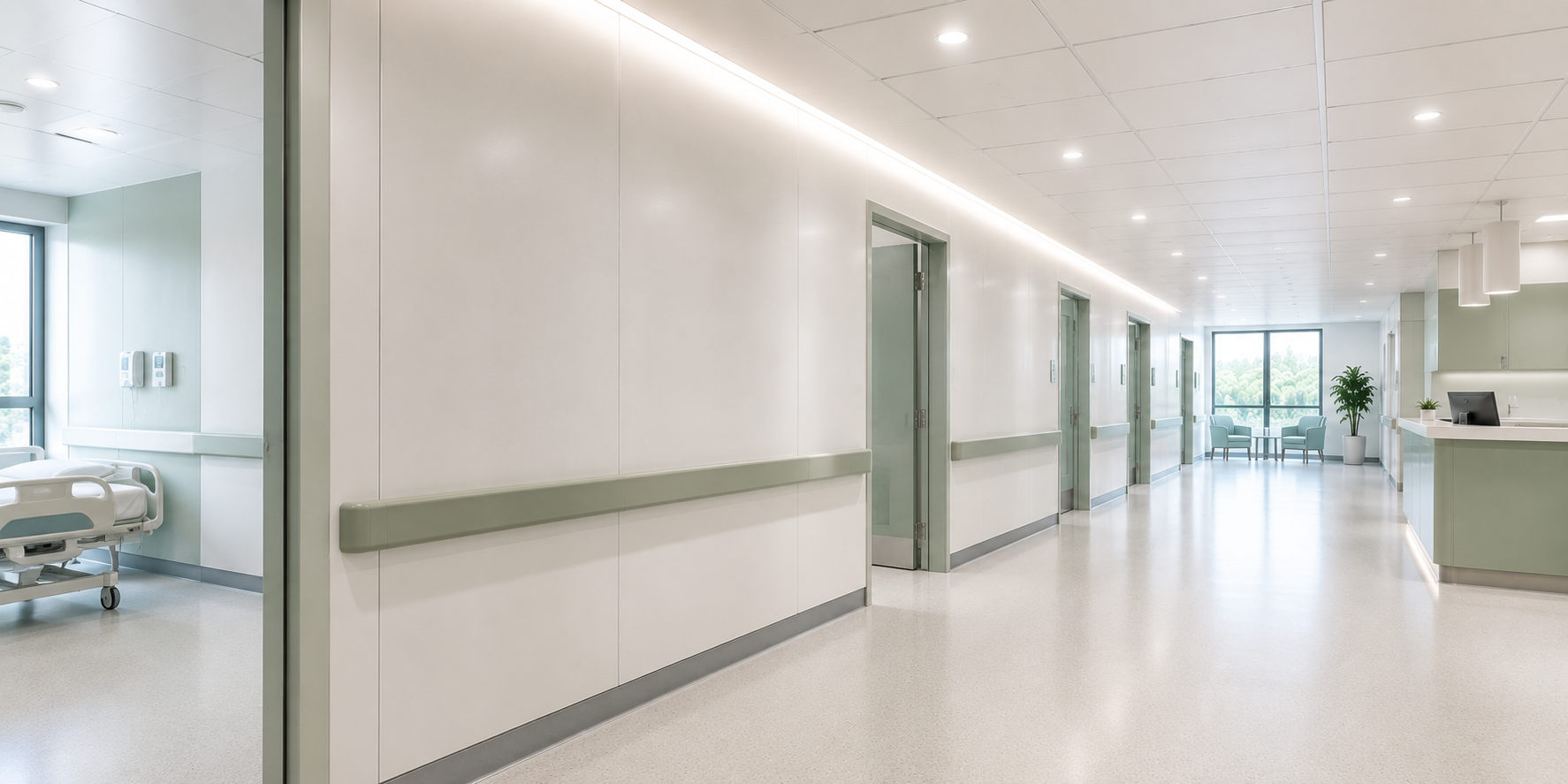
Hygieclad combines its PVC-free material composition with a smooth, easy-to-clean surface designed for healthcare and hygiene-sensitive environments.
It also offers durability and impact resistance for demanding interiors.
This balance is important. Sustainability becomes much easier to consider when the material can also meet the practical needs of the space.
4. Lightweight and Easy to Fabricate
The benefits of wall cladding also extend to the people working with the material.
Hygieclad PET-g sheets are lightweight and easy to handle. Installers can also cut and fabricate the material using standard tools.
This makes PET-g a practical option for contractors and installers working across healthcare, commercial and hygiene-sensitive projects.
Ease of fabrication can be especially useful for projects with detailed layouts, corners, openings and other site-specific requirements.
5. Supporting More Sustainable Material Selection
Sustainability requirements can vary significantly between projects.
For some healthcare developments, recyclability or PVC-free material selection may form part of the brief. Other projects may place greater emphasis on durability, maintenance or other technical requirements.
Non-PVC wall cladding gives project teams another material to evaluate when these sustainability considerations matter.
Hygieclad combines 100% PVC-free and 100% recyclable PET-g with the practical features expected from wall cladding for demanding environments.
This gives architects and specifiers a clear material option to consider alongside established systems.
Where Can Non-PVC Wall Cladding Be Used?
Hygieclad has been developed for healthcare and hygiene-sensitive environments.
Potential applications include:
- Hospitals and healthcare facilities
- Clinics
- Laboratories
- Cleanrooms
- Care homes
- Industrial kitchens
- Commercial hygiene areas
Each project has different requirements. Architects and specifiers should always review the relevant technical information before selecting a wall cladding system.
Is PVC-Free Wall Cladding Right for Every Project?
Not necessarily — and that is an important distinction.
The purpose of PET-g is not to suggest that every healthcare project must replace traditional PVC.
Instead, it gives project teams another choice.
PVC remains an established material for wall cladding applications. PET-g becomes particularly relevant when a project places greater emphasis on PVC-free material selection, recyclability and sustainability.
The right choice depends on the technical requirements and priorities of each project.
For architects and specifiers, having both options available makes it easier to select the material that best matches the project brief.
Hygieclad: A Non-PVC Option for Healthcare
Hygieclad brings these benefits together in one wall cladding solution.
Developed for healthcare and hygiene-sensitive environments, Hygieclad is made from 100% PVC-free and 100% recyclable PET-g.
It combines this material approach with durability, a smooth and easy-to-clean surface, fire performance and practical fabrication.
For healthcare projects in Ireland, it provides architects, contractors and specifiers with a new option when sustainability and practical performance need to work together.
Explore PVC-Free Wall Cladding for Your Project
Are you considering wall cladding options for a new healthcare project or refurbishment?