PVC vs PET-g wall cladding is an increasingly relevant comparison for architects and specifiers looking at material options for healthcare and hygiene-sensitive environments.
PVC wall cladding is an established solution with a long history across healthcare, commercial and hygienic applications. It offers durability, cleanability and practical installation benefits.
PET-g does not change the need for these qualities. Instead, it gives project teams an additional option when recyclability, material composition and PVC-free specification are also important.
So, how do the two materials compare?
Why Material Choice Matters in Healthcare
Healthcare environments place demanding requirements on interior materials.
Hospitals, clinics, laboratories and care facilities need wall finishes that can withstand regular cleaning, everyday impact and intensive use. Hygiene, durability and maintenance therefore remain important parts of the specification.
Sustainability is adding another consideration.
Architects and project teams are increasingly looking beyond how a material performs during use. They may also consider what the product contains and what can happen to it at the end of its useful life.
This does not make established materials unsuitable. Instead, it gives specifiers more factors to consider when choosing the right solution for each project.
PVC Wall Cladding: An Established Healthcare Solution
PVC wall cladding has been used across healthcare and hygiene-sensitive environments for many years.
There are good reasons for its established position.
PVC systems can provide durable and easy-to-maintain surfaces. They also offer practical fabrication and installation options for a wide range of interior applications.
For projects where these characteristics are the main priorities, PVC can continue to provide an effective wall cladding solution.
However, some projects now have additional sustainability requirements.
This is where alternative materials such as PET-g can provide another option.
PET-g Wall Cladding: A More Sustainable Alternative
PET-g offers many of the practical characteristics required for wall cladding while taking a different approach to material composition and end of life.
Hygieclad PET-g Wall Cladding, for example, is 100% PVC-free and 100% recyclable.
This makes PET-g particularly relevant when a project brief places greater emphasis on recyclability or asks project teams to consider PVC-free materials.
Importantly, choosing PET-g does not mean sustainability needs to become the only consideration.
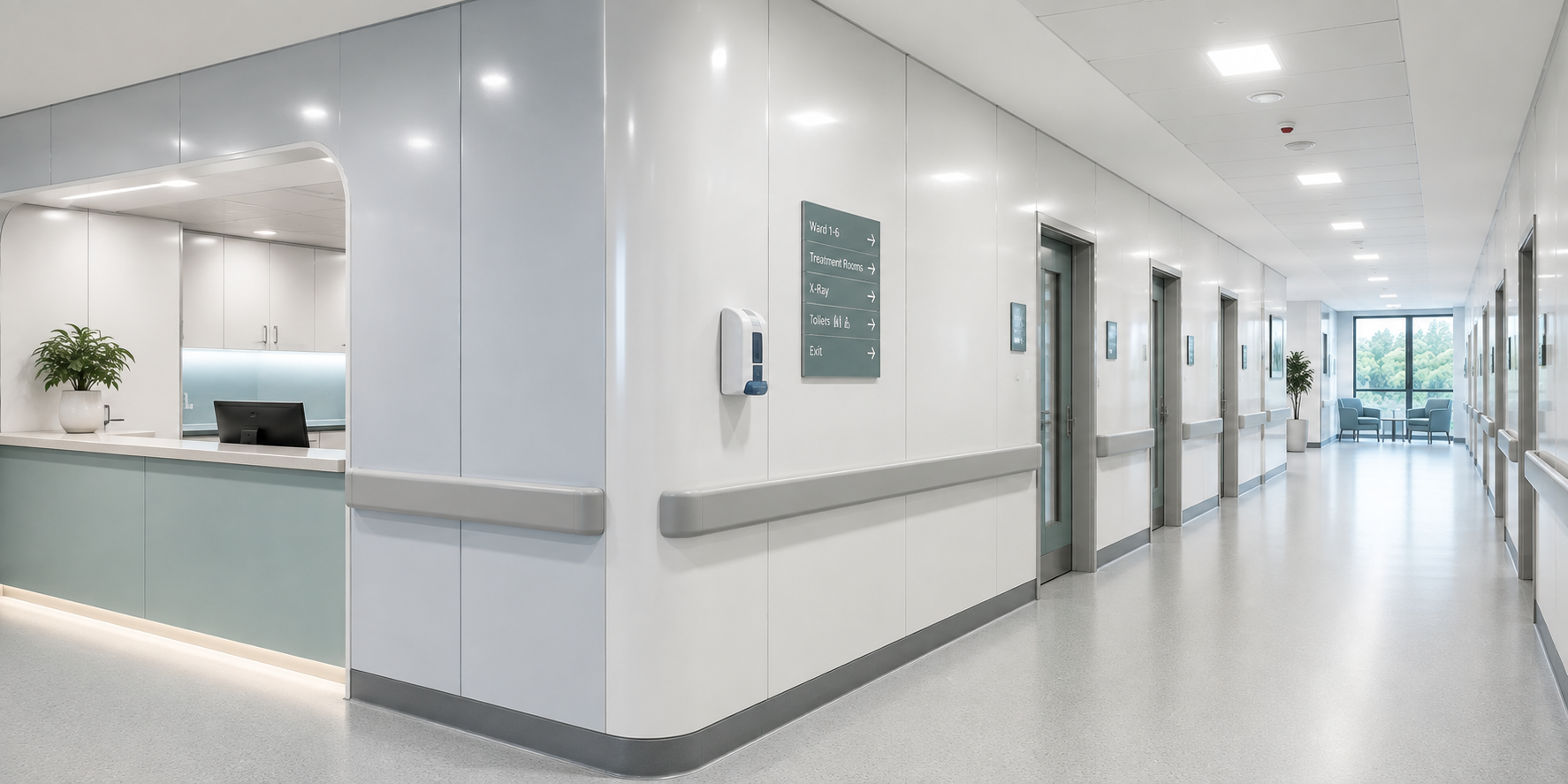
Hygieclad has been developed for healthcare and hygiene-sensitive environments. It combines its PVC-free and recyclable material composition with a smooth, easy-to-clean surface, durability, fire performance and ease of fabrication.
PVC vs PET-g Wall Cladding: Key Considerations
Rather than asking which material is universally “better”, architects and specifiers should ask which material better matches the priorities of the individual project.
The important point is that material selection depends on the requirements of the project.
Architects should always review the technical documentation for the specific product rather than assuming that every PVC or PET-g product has the same performance characteristics.
When Might PET-g Be the Right Choice?
PET-g becomes particularly interesting when sustainability forms a significant part of the project brief.
For example, a project team may want to explore PET-g when:
- PVC-free material selection is a project objective
- End-of-life recyclability is an important consideration
- Sustainable procurement forms part of the project strategy
- The project requires a hygienic and durable wall finish
- Architects want to evaluate newer material options alongside established systems
In these situations, PET-g gives project teams an additional choice without removing traditional PVC from consideration.
Sustainability Is About Providing More Choice
The development of new materials does not mean that healthcare projects need to abandon established solutions.
Instead, the market can offer different materials for different project priorities.
PVC remains an established wall cladding option with a proven history across healthcare and hygiene-sensitive applications.
PET-g expands that choice.
For projects where sustainability, recyclability and PVC-free specification carry greater weight, PET-g provides an alternative that can meet these priorities alongside the practical requirements of healthcare interiors.
This gives architects and specifiers more flexibility when matching materials to individual project briefs.
Hygieclad: A PVC-Free Option for Healthcare Projects
Hygieclad brings this additional choice to healthcare and hygiene-sensitive projects in Ireland.
Developed in partnership with Brett Martin and Material Solutions, Hygieclad is a 100% PVC-free and 100% recyclable PET-g wall cladding solution.
It has been developed for applications including hospitals, clinics, laboratories, cleanrooms, care homes, industrial kitchens and other hygiene-sensitive environments.
For project teams, this means there is now another material to consider alongside established wall cladding solutions.
Explore PET-g Wall Cladding for Your Next Project
Are you reviewing wall cladding options for an upcoming healthcare project?
If sustainability, recyclability or PVC-free material selection forms part of your brief, explore Hygieclad PET-g and see whether it could be the right option for your project.
Discover its applications, product features and technical information, or speak to the Material Solutions team for specification support.