
Precast concrete mould design is an important part of developing efficient manufacturing processes, particularly when projects involve complex geometries, customised elements or demanding surface requirements.
As precast manufacturers explore new ways to improve production, combining innovative moulding materials with digital design and precision manufacturing can open up new possibilities.
But how can a business introduce these solutions into its existing operations?
At The Material Solutions Group (tMSG), we work alongside RESHAPING Ltd. to help manufacturers explore practical moulding solutions, from straightforward material applications to more complex custom designs.
How to Approach Precast Concrete Mould Design
Introducing a new moulding solution does not necessarily mean redesigning an entire production facility.
In many cases, manufacturers can begin by identifying a specific production challenge and evaluating alternative materials or mould components.
A structured approach can help determine which applications offer the greatest potential.
Step 1: Identify Your Production Challenges
Start by reviewing your existing manufacturing process and identifying the hidden costs of traditional precast concrete production.
Consider the tasks that require the most preparation, manual work or material consumption.
Common areas worth evaluating include:
- Mould preparation and cleaning.
- Timber and plywood replacement.
- Complex openings and recesses.
- Adjustable dividers and pour stops.
- Surface finishing requirements.
- Customised or short-run production.
Identifying a specific challenge makes it easier to assess whether an alternative moulding material could provide a practical benefit.
Step 2: Select a Suitable Moulding Material
The next stage is to consider which material characteristics are most important for the application.
Factors may include sheet dimensions, thickness, handling requirements, cutting methods, surface finish and compatibility with existing mould systems.
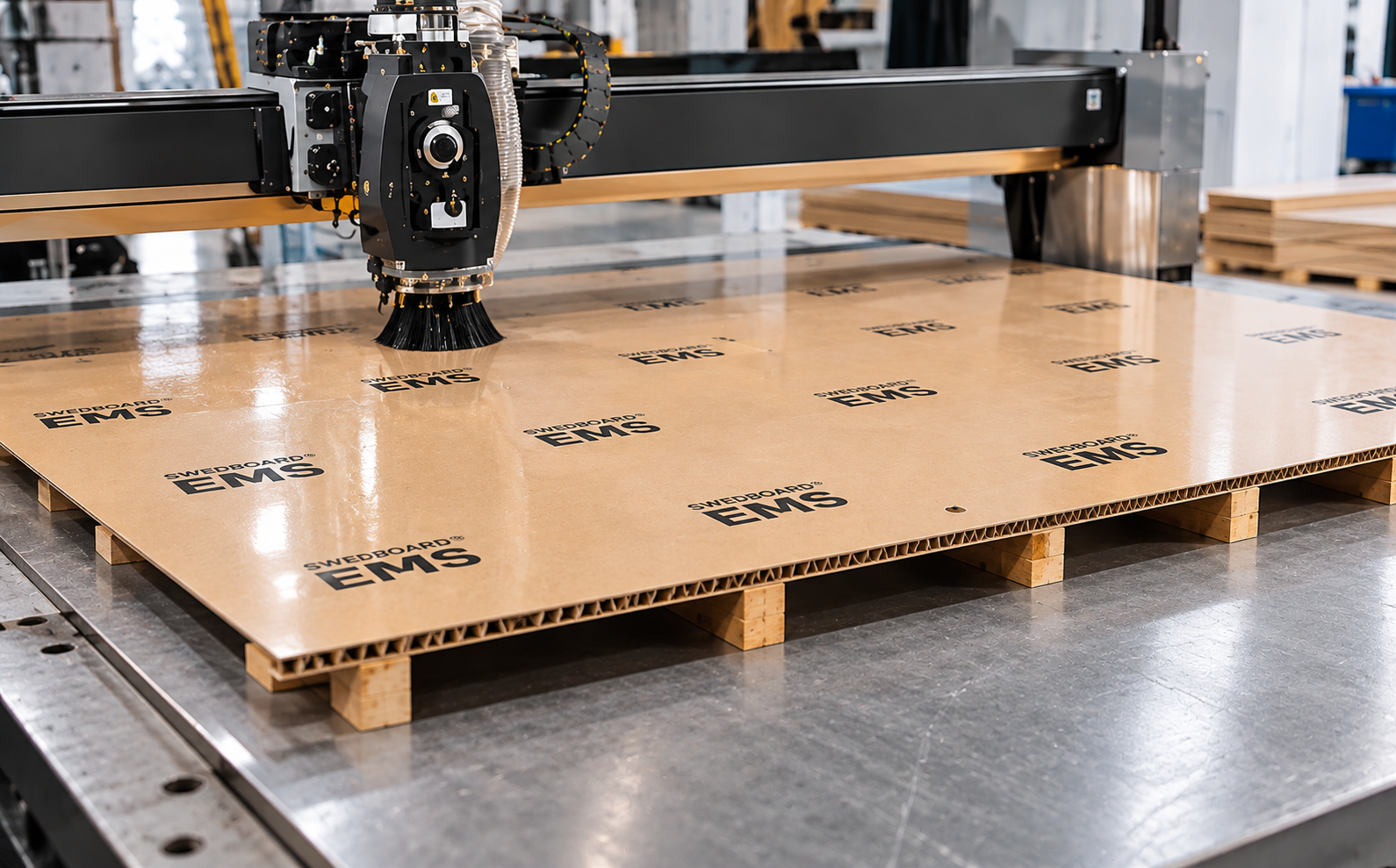
Swedboard EMS offers an alternative to conventional mould liners for suitable precast applications.
Its lightweight, paper-based construction and non-stick surface make it worth evaluating where simplified preparation and flexible processing are priorities.
Manufacturers can explore the material as a liner within an existing mould before considering more advanced applications.
Step 3: Explore Custom 3D Mould Design
For more complex projects, digital design can help translate production requirements into precise mould components.
Through tMSG’s partnership with RESHAPING Ltd., manufacturers can access specialist design expertise to develop customised moulding solutions.
The process begins by considering the required concrete element, its geometry and the practical requirements of production.
A digital design can then be developed into production-ready files for manufacturing.
This approach is particularly relevant for architectural features, complex openings and specialised precast elements.
Step 4: Precision Cutting and Manufacturing
Once the design is prepared, CNC cutting can be used to manufacture mould components with accuracy and repeatability.
Digital cutting enables the creation of shapes that may be more difficult or time-consuming to produce manually.
It also provides opportunities to optimise cutting layouts and make efficient use of available material.
For manufacturers handling repeat projects or detailed components, precision manufacturing can support consistency between production runs.
Step 5: Flatpack Delivery and Assembly
Custom mould components can be supplied pre-cut and prepared for assembly.
The RESHAPING process includes flatpack delivery, helping simplify transportation and handling.
Components are designed for straightforward assembly, allowing manufacturers to integrate the mould solution into their production environment.
The exact assembly requirements will depend on the project and mould design.
Step 6: Test, Evaluate and Refine
Before adopting a new moulding method across a wider production process, it is important to evaluate its performance in the intended application.
A practical trial could involve a selected concrete element or mould component.
Manufacturers should consider:
- Preparation and assembly time.
- Ease of cutting and handling.
- Concrete surface quality.
- Demoulding performance.
- Material consumption and waste.
- Overall production suitability.
Recording these observations can help determine whether the solution should be refined, repeated or expanded to other applications.
From Everyday Mould Liners to Advanced Precast Solutions
Not every manufacturer needs a fully customised moulding system.
For some businesses, the first step may be as simple as introducing an alternative liner into an existing timber shutter.
For others, the opportunity may involve developing a more complex mould using 3D design and precision cutting.
The advantage of combining Swedboard EMS with specialist design and manufacturing expertise is the ability to explore different levels of complexity according to the project.
This gives manufacturers a practical starting point while supporting future development.
Develop Your Next Precast Project with tMSG
At The Material Solutions Group, we understand that every precast manufacturing process is different.
That is why our approach focuses on helping businesses identify suitable materials, explore applications and access specialist expertise where required.
Working with RESHAPING Ltd., we can support the development of moulding solutions that combine innovative materials with digital design and precision manufacturing.
Whether you are looking to improve an existing mould or explore a new approach to complex precast elements, our team is available to discuss your requirements.
Have a precast project in mind?