
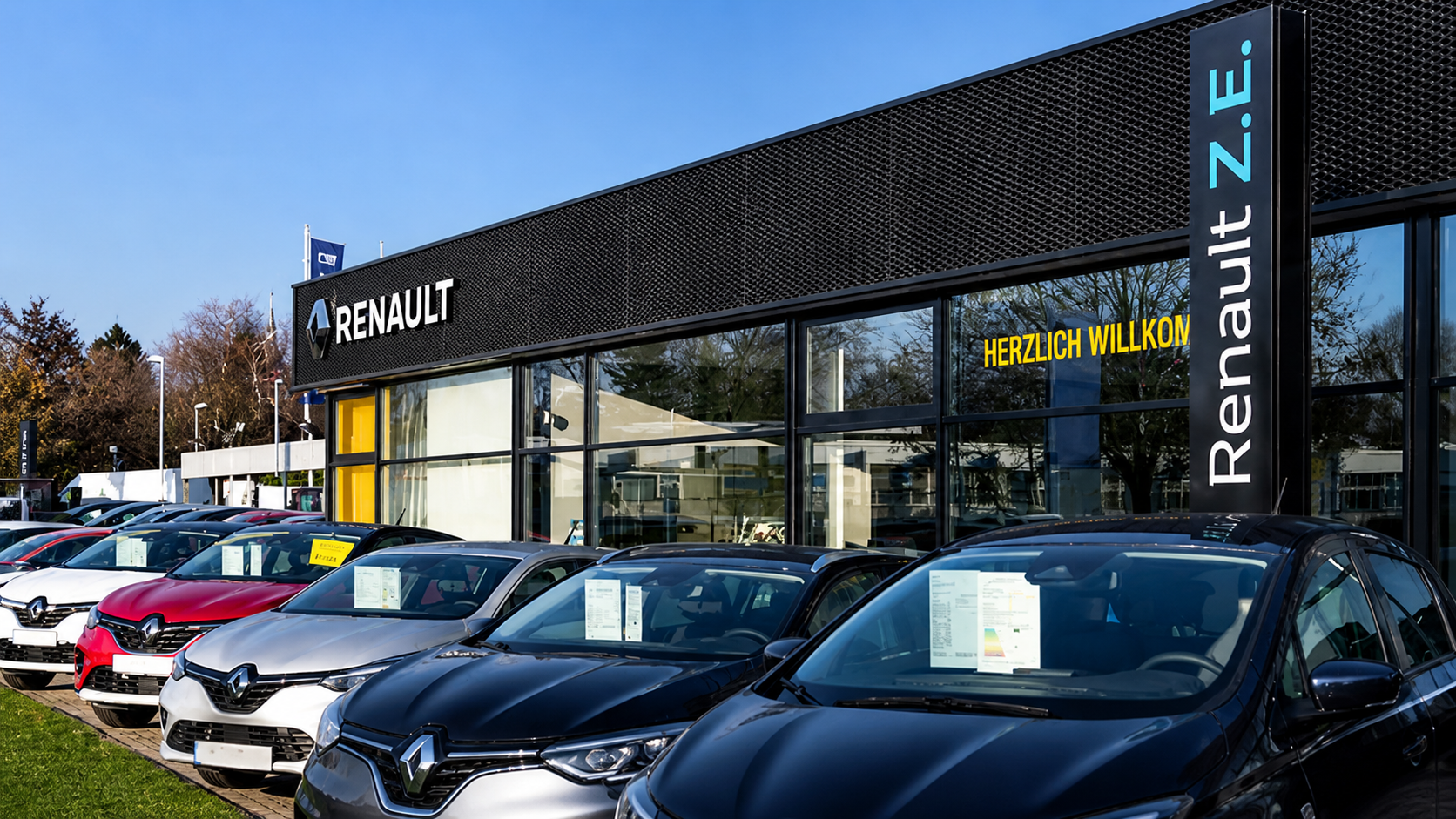
OEM Corporate Identity compliance helps car dealerships maintain a consistent brand image and meet the latest visual standards set by vehicle manufacturers.
For franchised dealerships, a showroom is more than a place to sell vehicles. It represents the automotive brand itself.
Manufacturers regularly update their Corporate Identity (CI) standards to create a consistent customer experience across their dealership networks. These changes can affect colours, signage, interior environments and building façades.
When a new facelift deadline approaches, dealerships need to decide how to implement these changes efficiently.
The challenge is not simply achieving the right look. Dealerships also need to consider cost, project time, business disruption and long-term performance.
So, how can you meet new OEM requirements without turning a visual upgrade into a major construction project?
This guide explains what dealerships should consider before their next CI update.
What Is OEM Corporate Identity Compliance?
OEM Corporate Identity compliance refers to following the visual and design standards established by an Original Equipment Manufacturer (OEM).
Automotive manufacturers use these guidelines to maintain a consistent brand identity across their dealership networks.
Requirements can vary between brands and programmes, but they may cover:
- Brand colours
- Exterior façade finishes
- Signage
- Window and door profiles
- Interior surfaces
- Showroom layouts
- Customer-facing areas
- Materials and finishes
For dealerships, compliance helps ensure that the physical environment reflects the same brand customers see across advertising, vehicles and other locations.
Why Does Corporate Identity Matter for Car Dealerships?
Customers form an impression of a dealership before they walk through the door.
A modern, well-maintained exterior can communicate professionalism and strengthen the connection between the dealership and the automotive brand it represents.
Consistency also matters for manufacturers.
Customers visiting different dealerships should experience a recognisable brand environment. Corporate Identity programmes help OEMs create this consistency across multiple locations.
However, CI standards evolve.
A dealership that met all requirements several years ago may eventually need another update to match new colours, finishes or design guidelines.
That is where planning becomes important.
Planning for Your Next OEM Corporate Identity Deadline
Waiting until a facelift deadline approaches can limit your options.
Early planning gives dealerships more time to assess the building, understand the new requirements and compare different refurbishment methods.
Before starting your next dealership facelift, consider the following areas.
1. Understand Exactly What Needs to Change
A new Corporate Identity programme does not always require a complete building renovation.
Start by identifying which elements no longer meet the latest OEM standards.
Does the entire façade need updating? Or does the project mainly involve colours, panels, profiles or specific architectural details?
Understanding the scope can prevent unnecessary work and help control costs.
2. Review the Existing Façade
Before replacing anything, assess what you already have.
Existing façade panels and profiles may still perform well even if their appearance no longer matches the required brand identity.
If these surfaces remain suitable, refurbishment could provide an alternative to full replacement.
This can reduce material use and simplify the project.
3. Confirm Colours and Finishes
Colour plays an important role in automotive brand identity.
Even a small difference in colour or finish can affect the overall appearance of a dealership.
Check the latest OEM specifications before choosing materials. Consider both colour accuracy and the required surface finish.
For some projects, custom colour matching can help achieve specific corporate identity requirements.
4. Consider the Impact on Daily Operations
Your dealership still needs to sell cars while the refurbishment takes place.
Traditional renovation methods can create practical challenges. Noise, dust, paint overspray and restricted access may affect customers, employees and vehicles on site.
Before choosing a refurbishment solution, ask:
Can our dealership remain open while the work takes place?
For a busy automotive business, reducing downtime can be just as important as achieving the required visual result.
What Are the Main Options for a Dealership CI Facelift?
Dealerships can approach an exterior CI update in several ways.
The condition of the existing building, OEM requirements, budget and project schedule will influence the right choice.
Repainting the Existing Façade
Repainting can change the colour of existing surfaces without replacing the complete façade.
However, commercial painting often requires preparation, multiple coats and drying time.
Dealerships also need to consider paint overspray around vehicles and customer areas.
Replacing Façade Panels
Panel replacement can make sense when existing materials have reached the end of their useful life or no longer meet technical requirements.
However, replacing structurally sound panels simply to change their appearance may add unnecessary cost, labour and waste.
Using Architectural Façade Film
Architectural film provides another way to update suitable existing surfaces.
Instead of removing panels or repainting them, installers apply a specialist architectural film directly to the prepared surface.
This approach can change both the colour and finish of a façade while retaining the existing building materials.
For dealerships facing CI updates, this can offer a practical way to achieve a significant visual transformation.
How Can Façade Film Support OEM Corporate Identity Compliance?
Avery Dennison Façade Film offers dealerships an alternative to traditional repainting and façade replacement.
The architectural film can refresh suitable exterior surfaces and help dealerships achieve specific visual requirements.
This makes it particularly relevant for Corporate Identity projects.
Precise Colour Requirements
OEM guidelines often specify exact brand colours.
Avery Dennison offers a range of colours and finishes, together with colour-matching options for projects that require specific shades.
This can help dealerships create an exterior that aligns closely with manufacturer guidelines.
Minimal Disruption
Façade Film uses a dry application process.
There is no paint overspray and no need to wait for several coats of paint to dry. Installers can also plan the work around entrances and normal dealership activity.
As a result, dealerships can reduce disruption while the transformation takes place.
Up to 10 Years of Outdoor Durability
A dealership facelift represents an investment, so long-term performance matters.
Depending on the product and application conditions, Avery Dennison Façade Film can provide up to 10 years of outdoor durability.
This helps dealerships maintain a professional appearance over the long term.
A Premium Finish
Corporate Identity compliance involves more than selecting the correct colour.
The overall finish needs to reflect the quality of the automotive brand.
Façade Film offers different finishes, including gloss, lustre and matt options. This provides greater flexibility when creating a specific architectural appearance.
Retaining Existing Building Materials
Not every CI update needs a new façade.
When the existing panels remain suitable, applying architectural film can give them a completely new appearance.
This approach extends the life of existing surfaces. It can also reduce material waste compared with removing and replacing suitable façade panels.
Can Dealerships Stay Open During a CI Facelift?
In many cases, yes.
The level of disruption depends on the project scope, building and chosen renovation method.
Architectural film can make the process easier because installers use a dry application method. They do not need to manage paint drying or overspray.
Installation teams can also plan work around customer entrances and operational areas.
For dealerships, this can mean meeting new brand standards without putting business on hold.
Real Dealership CI Transformations
Façade Film has already supported automotive Corporate Identity projects across Europe.
Dealerships representing major automotive brands have used the solution to update ageing façades and introduce new brand colours.
For example, a Mercedes-Benz dealership in Germany needed to meet new design and colour specifications as part of the brand’s MAR2020 programme.
Rather than choosing conventional paint, the dealership used Façade Film to update its exterior profiles. The project covered around 800 running metres of profiles and took approximately 10 days.
Other automotive projects have used the same approach to transform ageing façades and implement updated manufacturer colour requirements.
These projects demonstrate an important point: a major visual transformation does not always require major structural changes.
Large Group or Independent Dealer: CI Still Matters
OEM Corporate Identity requirements naturally have greater relevance for franchised dealerships.
However, the principles behind them also matter to independent dealers.
Customers expect automotive businesses to look professional, modern and trustworthy.
Independent dealerships can use the same refurbishment approach to update ageing exteriors, introduce their own brand colours or create a more premium showroom environment.
The goal may differ, but the principle remains the same: your building should reflect the quality of the business inside.
Start Planning Before the Deadline
An upcoming OEM facelift deadline should not automatically mean a disruptive refurbishment project.
Start by understanding the new requirements. Then assess your existing façade and compare the available renovation methods.
Consider more than the initial project cost.
Think about downtime, maintenance, durability, waste and the impact on customers and staff.
For suitable buildings, architectural film can provide a practical alternative to traditional painting or panel replacement.
Most importantly, early planning gives you more options.
Preparing for Your Next Dealership Facelift?
See how dealerships have already transformed their exteriors while maintaining day-to-day operations.
Our Façade Solutions Case Study Brochure features real automotive projects, before-and-after transformations and examples of Façade Film used to meet different dealership refurbishment requirements.
Explore real projects before planning your next CI update.
DOWNLOAD THE FREE CASE STUDY BROCHURE
Have an upcoming OEM Corporate Identity deadline?
Our team can help you explore your façade requirements, available finishes and whether Façade Film could suit your project.