
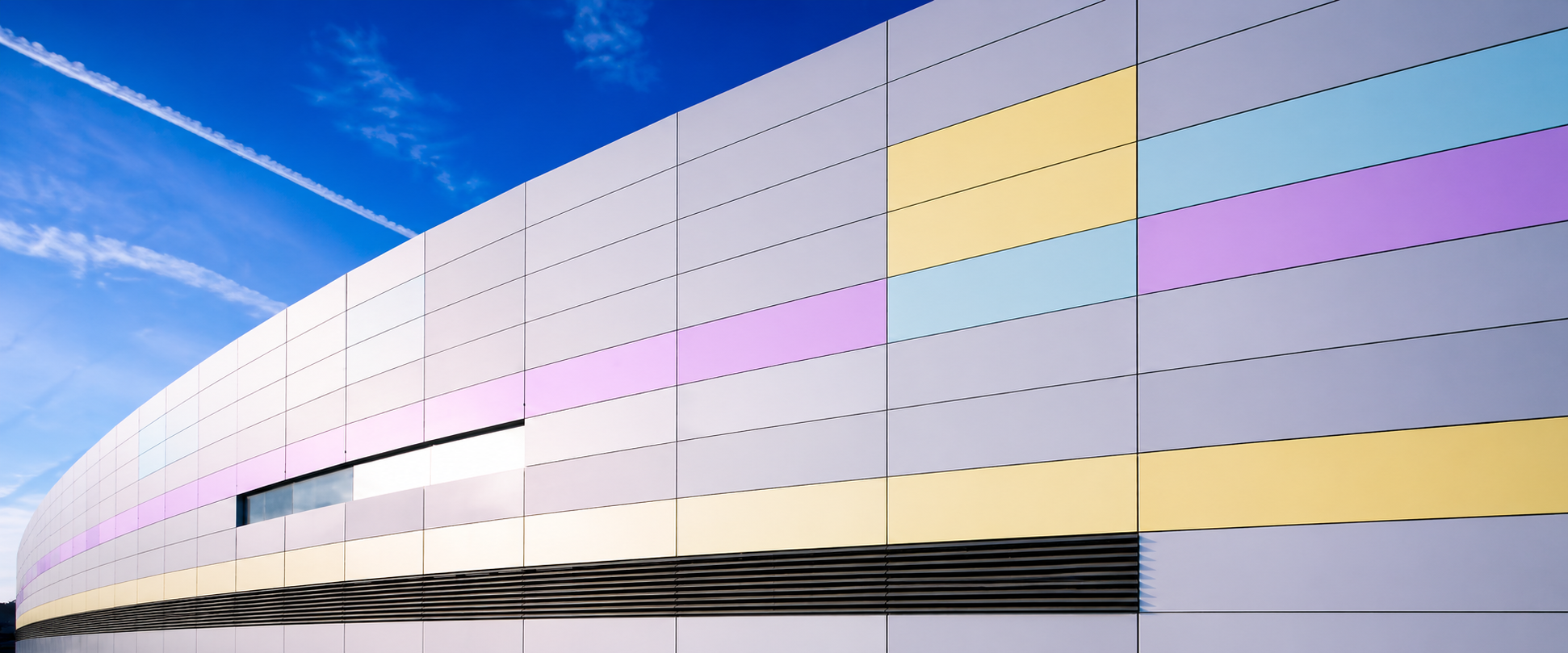
Architectural façade film offers facility managers a practical way to transform commercial building exteriors without repainting or replacing suitable existing façade panels.
Building exteriors naturally change over time. Colours fade, finishes age and corporate branding evolves.
At some point, the building may still perform perfectly well but no longer look the way the business wants it to.
Traditionally, facility managers might consider repainting the exterior or replacing façade materials altogether.
Today, there is another option.
Architectural façade film can give suitable existing surfaces a completely new appearance. It can change their colour and finish while keeping much of the existing façade in place.
But how does it work, where can you use it and when should you consider it?
Here’s what facility managers need to know.
What Is Architectural Façade Film?
Architectural façade film is a specialist self-adhesive material designed to renovate, restyle and protect suitable exterior building surfaces.
Rather than removing an existing façade, trained installers apply the film directly to compatible surfaces after the correct preparation.
This creates a new exterior appearance without the need for traditional repainting or complete panel replacement.
Avery Dennison Façade Film, for example, can transform exterior panels, window frames and other architectural elements.
It offers different colours and finishes, including gloss, lustre and matt options. Colour matching can also support projects with specific corporate identity requirements.
The result is a relatively simple idea:
Keep the existing surface. Transform the way it looks.
How Does Façade Film Work?
Façade Film uses pressure-sensitive adhesive technology to bond to suitable building surfaces.
Before installation, the project team needs to inspect the existing substrate. They can then determine whether the surface suits the application.
The installation process typically includes:
- Assessing the existing façade
- Identifying suitable surfaces
- Selecting the required colour and finish
- Preparing and cleaning the surface
- Applying the architectural film
- Inspecting the completed installation
Unlike traditional paint, Façade Film uses a dry application process.
There is no need to apply several coats of paint or wait for each layer to dry. This can help simplify the refurbishment process and reduce disruption around the building.
Where Can You Use Architectural Façade Film?
Architectural film can work across many commercial environments.
Potential applications include:
- Car dealerships and showrooms
- Offices
- Retail buildings
- Hotels
- Corporate facilities
- Commercial properties
- Window and door profiles
- Exterior architectural panels
The existing substrate plays an important role in determining whether film suits a project.
Avery Dennison Façade Film can work with several suitable substrates, including aluminium, steel, plastics and reinforced façade panels.
A project assessment should always confirm compatibility before installation begins.
Why Are Facility Managers Considering Façade Film?
Facility managers need to balance several priorities.
The building needs to look professional. Projects need to stay within budget. Maintenance matters. Businesses may also need to continue operating while refurbishment takes place.
Façade Film can address several of these concerns at the same time.
1. Less Disruption to Building Operations
Exterior renovation can create practical challenges for an occupied commercial building.
Painting may introduce overspray, preparation work and drying times. Larger replacement projects can create even more disruption.
Façade Film offers a dry application process with no paint drying time.
Installers can plan the work around the building’s operations and access requirements. This can help businesses continue their normal activities throughout the project.
2. A Faster Way to Change the Building’s Appearance
A visual transformation does not always require major construction work.
When the existing surfaces remain suitable, architectural film can change their appearance without removing the complete façade.
This makes it particularly useful when the main objective involves colour, finish, branding or modernisation rather than structural changes.
For franchised dealerships, explore what you need to know about OEM Corporate Identity compliance.
3. Long-Term Exterior Performance
Facility managers need to think beyond the initial installation.
How will the material perform outdoors? How quickly will another refurbishment become necessary?
Depending on the product, application and environmental conditions, Avery Dennison Façade Film can offer up to 10 years of outdoor durability.
This makes it a long-term refurbishment option rather than a temporary cosmetic solution.
4. More Flexibility With Colours and Finishes
The exterior of a commercial building often needs to reflect a specific visual identity.
This may involve corporate colours, updated branding or a completely new architectural style.
Façade Film provides a range of colours and surface finishes. Custom colour-matching options can also support projects with specific design requirements.
This flexibility can be particularly useful for businesses managing multiple locations or following corporate identity standards.
5. Extend the Life of Existing Façade Materials
Not every ageing façade needs replacement.
Sometimes, the existing panels remain structurally suitable but no longer deliver the required appearance.
Architectural film can help extend the useful life of these surfaces by giving them a new finish.
Keeping suitable materials in place can also reduce the amount of waste associated with removing and replacing façade components.
Façade Film vs Paint: What’s the Difference?
Facility managers often compare architectural film with traditional exterior painting.
Both can change the appearance of a building, but the installation processes differ.
Paint can require extensive preparation, several coats and drying time. Projects must also manage overspray and environmental conditions during application.
Façade Film uses a dry application method. Installers apply a single layer to the prepared surface.
This removes paint overspray and drying time from the process.
Film can also offer consistent factory-produced colours and finishes, which can help when a business needs the same appearance across different areas or locations.
The best option will depend on the building, substrate, budget and project requirements.
Learn why more dealerships are moving away from traditional painting.
Façade Film vs Panel Replacement
Panel replacement provides another option for commercial façade renovation.
If existing panels have structural damage or no longer perform correctly, replacement may make sense.
However, what happens when the panels still work perfectly well and only their appearance needs an update?
Replacing them can add materials, labour, waste and disruption to the project.
In this situation, Façade Film may provide a more practical alternative.
Rather than removing suitable panels, the project can retain them and update their exterior finish.
Is Architectural Façade Film Sustainable?
Sustainability in refurbishment involves more than selecting a particular material.
One important consideration is how much of the existing building you can retain.
If structurally suitable façade panels can remain in place, there may be less need to manufacture, transport and install replacement materials.
Keeping existing building elements in use for longer can also reduce renovation waste.
For facility managers working towards more resource-efficient refurbishment strategies, this makes surface renovation worth considering alongside complete replacement.
Is Façade Film Suitable for Every Building?
No single refurbishment method suits every building.
The condition and type of the existing surface matter. The required finish, building environment and project objectives also affect the decision.
Before specifying Façade Film, the project team should assess the existing façade and confirm substrate compatibility.
If the existing panels have significant structural problems, film will not solve those underlying issues.
However, if the façade remains suitable and the main objective is to update its appearance, architectural film may provide an effective alternative.
How Long Does Architectural Façade Film Last?
Durability depends on the selected product, substrate, installation and environmental conditions.
Avery Dennison Façade Film can provide up to 10 years of outdoor durability, depending on the specific project conditions.
This long-term performance makes it suitable for commercial refurbishment projects where appearance and durability both matter.
Facility managers should discuss the building and application requirements with the material supplier before specifying a solution.
When Should Facility Managers Consider Façade Film?
Consider architectural film when your building needs a visual update but the existing façade remains suitable.
It may be particularly relevant when you want to:
- Modernise an ageing building
- Change exterior colours
- Introduce new corporate branding
- Refresh faded façade panels
- Reduce disruption during refurbishment
- Avoid unnecessary panel replacement
- Extend the useful life of existing surfaces
The earlier you assess these options, the easier it becomes to compare costs, timelines and refurbishment methods.
Planning a showroom upgrade? Read our complete guide to dealership façade renovation.
A Smarter Way to Approach Façade Renovation
Commercial façade renovation does not always need to start with removing what is already there.
Sometimes, the better question is:
Can we transform the existing building instead?
Architectural Façade Film gives facility managers another option between repainting and complete façade replacement.
For suitable buildings, it can deliver a modern appearance, long-term exterior performance and greater design flexibility. It can also minimise disruption to normal business operations.
The result is a refurbishment strategy focused not only on how the building will look, but also on how efficiently you can achieve the transformation.
See Architectural Façade Film in Action
Want to see what Façade Film can achieve on real commercial buildings?
Our Façade Solutions Case Study Brochure features real projects and before-and-after transformations. It shows how businesses have used Façade Film to modernise existing exteriors.
See the transformations and explore what’s possible for your building.
DOWNLOAD THE FREE CASE STUDY BROCHURE
Planning a façade refurbishment?
Our team can help you understand the available options and explore whether Avery Dennison Façade Film suits your building.